
Welcome to your roadmap for growing coffee in harmony with nature. This guide isn’t just about beans—it’s about building a system that protects ecosystems, supports farmers, and delivers richer flavors to your cup. Let’s explore how eco-friendly methods can transform the way we cultivate one of the world’s favorite beverages.
Responsible production goes beyond avoiding chemicals. It’s about creating balance. Think shade-grown crops that shelter wildlife, water-saving irrigation, and soil health techniques that keep farms thriving for generations. These strategies aren’t just good for the earth—they often lead to higher-quality harvests and better incomes for growers.
Innovations like organic composting and bird-friendly certifications show what’s possible. Organizations like the NSF have highlighted how these approaches reduce deforestation while stabilizing local economies. From Guatemala to Ethiopia, farmers prove that environmentally conscious methods work at scale.
Our goal? A coffee industry where every sip tells a story of renewal. Whether you’re a grower, roaster, or coffee lover, this guide will show practical steps to make that vision real. Let’s brew a better future—together.
Key Takeaways
- Eco-friendly farming protects biodiversity while improving crop quality
- Methods like shade-growing and water conservation benefit both land and farmers
- Research shows responsible practices support long-term economic stability
- Certifications help consumers identify ethically produced beans
- Small changes in farming can create industry-wide positive impacts
Introduction to Eco-Friendly Coffee Farming
The way we grow our morning brew is undergoing a quiet revolution. Over 2.25 billion cups are consumed daily worldwide, creating both opportunity and urgency. Rising temperatures and unpredictable weather patterns now threaten nearly half of suitable growing areas by 2050, according to recent climate models.
The Rise of Responsible Bean Cultivation
Consumers increasingly seek beans grown with care—sales of certified ethical products jumped 17% last year. This shift isn’t just trendy. Farmers from Colombia to Vietnam report that methods preserving tree cover and reducing chemicals actually boost yields by up to 30% in drought-prone regions.
Guardians of the Growing Lands
Extreme weather costs growers $3.2 billion annually. “We’re not just farming crops anymore—we’re farming ecosystems,” notes a Brazilian cooperative leader. Forward-thinking estates now use:
- Precision irrigation systems that slash water use
- Compost programs recycling 90% of plant waste
- Bird-friendly certification preserving migratory routes
Major roasters have pledged to source 100% verified beans by 2030. This commitment helps smallholders access new markets while protecting the landscapes that make great coffee possible.
Understanding Sustainable Agriculture for Coffee
Transforming coffee cultivation starts with rethinking how we nurture both plants and people. This approach blends traditional wisdom with modern science to create thriving ecosystems where beans and biodiversity coexist.

More Than Just Growing Beans
Responsible bean cultivation means maintaining forest canopies that shelter migratory songbirds while producing harvests. A Cornell University study found shade-grown plots host 40% more bird species than sun-exposed fields. These feathered helpers control pests naturally, reducing chemical needs by up to 60%.
Triple Win: Ecology, Economy, Community
Growers adopting these methods report surprising benefits. A Colombian cooperative saw incomes rise 22% after achieving bird-friendly certification. “The birds became our partners,” says member Luisa Gómez. “Now we earn premium prices while protecting our watershed.”
Key impacts include:
- Healthier soils retaining 50% more moisture during droughts
- Cooperatives funding local schools through quality bonuses
- Carbon sequestration rates matching young forests
“When you farm with nature, every harvest leaves the land better than you found it.”
These practices create ripple effects beyond individual farms. Villages near certified estates often see improved water quality and new ecotourism opportunities. It’s proof that thoughtful cultivation can brew prosperity for both landscapes and families.
Eco-Friendly Practices in Coffee Production
The secret to exceptional beans? Working smarter with nature’s own playbook. Growers worldwide are adopting techniques that nurture landscapes while enhancing flavor profiles. These approaches create a virtuous cycle—healthy ecosystems yield robust crops, which in turn support thriving communities.
Shade-Grown and Organic Farming Techniques
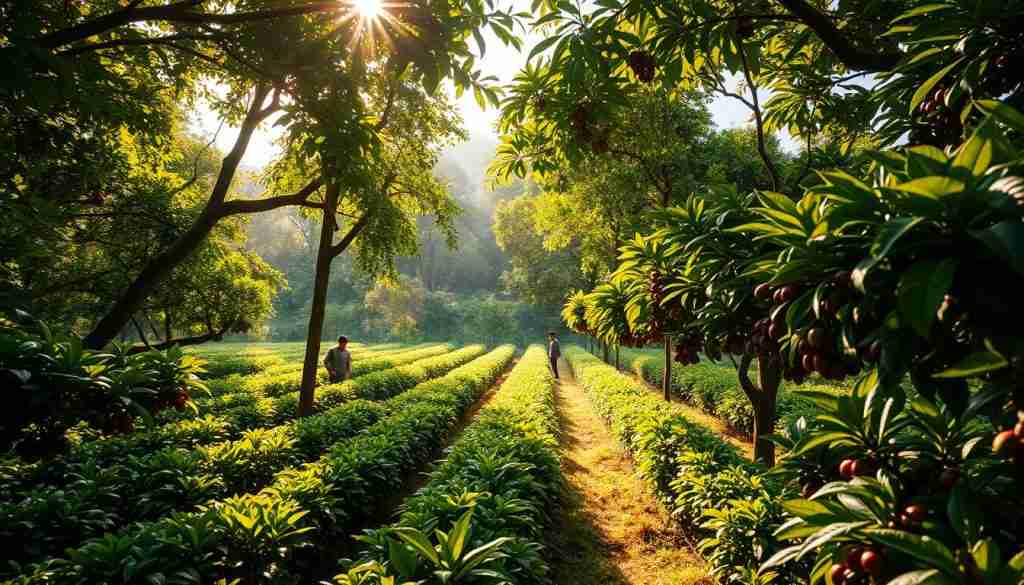
Canopy-covered plots mimic natural forests, with trees sheltering 20+ bird species per acre according to Audubon Society data. This living umbrella slows bean maturation, allowing complex sugars to develop. Organic methods take it further—farmers use chili-garlic sprays instead of pesticides and fertilize with composted cherry pulp.
Third-generation grower Marco Tulio in Costa Rica explains: “Our grandfathers called it ‘farming with eyes wide open.’ Now we know these time-tested methods prevent soil erosion and keep waterways clean.” Certified organic coffee often commands 15-20% price premiums, making eco-logic financially viable.
Water Conservation and Soil Health Strategies
Smart irrigation makes every drop count. Drip systems target plant roots directly, cutting water use by 40% compared to traditional flooding. During processing, many mills now recycle washing stations’ water up to five times through settling tanks.
Below ground, earthworms become allies. Farmers boost soil vitality by:
- Rotating nitrogen-fixing cover crops
- Applying charcoal-rich biochar to retain nutrients
- Mulching with coffee husks to prevent erosion
These strategies aren’t just about preservation—they actively regenerate land. As soil organic matter increases, farms become more drought-resistant. The result? Beans with brighter acidity and deeper flavor notes that reflect their thriving ecosystem.
Innovative Regenerative Methods in Coffee Farming
Farmers are rewriting the rules of crop renewal with techniques that rebuild ecosystems while keeping harvests flowing. These groundbreaking approaches allow growers to adapt to shifting conditions without sacrificing productivity.
Tree Surgery That Breathes New Life
Top working revitalizes aging plants through strategic grafting. Farmers replace old tree tops with disease-resistant varieties, preserving established root systems. This cost-effective method lets growers upgrade their stock in 18-24 months—half the time of replanting. A Nicaraguan cooperative using this approach reported 35% higher yields within three years.
Forests Within Farms
Agroforestry transforms monocrop fields into layered ecosystems. By planting fruit trees and hardwoods alongside beans, farmers create natural pest control and windbreaks. A 2021 study found these mixed plots store 60% more carbon than conventional farms while sheltering endangered pollinators.
TechnoServe’s CaféTec program demonstrates how expert guidance accelerates change. Their field schools teach:
- Precision grafting techniques for seamless variety transitions
- Companion planting strategies that boost soil fertility
- Harvest scheduling to maintain cash flow during transitions
“We’re not just surviving climate shocks—we’re outsmarting them,” shares Guatemalan grower Rosa Méndez, whose family farm doubled production after adopting these methods. By blending ancient wisdom with modern science, regenerative practices offer a roadmap for continuous improvement in challenging times.
Overcoming Environmental and Market Challenges
Growers face a dual storm of environmental shifts and economic pressures. Rising temperatures alter rainfall patterns, with 34% of farms now experiencing water shortages during critical growth phases. Meanwhile, certification costs can consume 15% of smallholders’ profits, creating barriers to premium markets.
Adapting to Climate Change and Reducing Environmental Impact
Innovative water management is becoming essential. Honduran estates using sensor-based irrigation cut usage by 40% while maintaining yields. Soil conservation techniques like contour planting reduce erosion risks by 60%, according to World Coffee Research data. Key strategies include:
- Installing rainwater catchment systems during wet seasons
- Using shade trees to regulate microclimates
- Training workers in climate-resilient pruning methods
Managing Costs, Certification, and Market Access
Navigating certification processes requires smart resource allocation. Ethiopian cooperatives now pool funds for group audits, slashing individual costs by 75%. Digital tools help track compliance, while direct trade partnerships bypass traditional brokers.
Industry leaders recommend:
- Prioritizing certifications with proven price premiums
- Adopting mobile apps for real-time crop management
- Partnering with roasters offering long-term contracts
These approaches help communities thrive despite global market fluctuations. As one Tanzanian grower noted: “When we control our resources, we control our future.”
Implementing Best Practices: From Shade-Grown to Fair Trade
Groundbreaking approaches in bean cultivation are proving that ethical practices drive quality and profitability. Industry leaders and cooperatives alike are setting new standards through innovative programs and community-focused models.
Case Studies from Industry Leaders and Cooperative Models
Nespresso’s AAA Sustainable Quality™ Program partners with 100,000 growers across 15 countries. By training farmers in precision pruning and organic pest control, participants see 28% higher yields while maintaining canopy cover for wildlife. Starbucks’ C.A.F.E. Practices initiative goes further, linking price premiums to verifiable improvements in:
- Water recycling systems reducing usage by 50%
- Composting processes that triple soil organic matter
- Fair wages ensuring 30% profit margins for smallholders
| Program | Key Features | Production Impact | Soil Benefits |
|---|---|---|---|
| Nespresso AAA | Shade management, quality grading | +22% bean density | 12% erosion reduction |
| Starbucks C.A.F.E. | Living wages, biodiversity maps | 18% fewer defects | 2.5% annual carbon increase |
Steps for Transitioning to Responsible Bean Cultivation
Successful farms follow a phased approach:
- Conduct soil tests to identify nutrient gaps
- Introduce shade trees at 40-60 plants per acre
- Train workers in organic composting techniques
- Partner with certification bodies for market access
A Guatemalan cooperative demonstrated this path, transitioning 500 acres in three years. Their secret? “Start small, measure everything, and share results,” advises manager Carlos Ortiz. Today, their beans command 25% premiums while supporting 12 local schools through profit-sharing.
Conclusion
The journey toward eco-conscious cultivation proves that every bean tells a story. By adopting methods that protect ecosystems and uplift communities, growers create better harvests while safeguarding our planet’s future.
Integrated strategies—from water-smart irrigation to fair trade partnerships—build resilience against shifting weather patterns. These approaches don’t just improve cup quality; they’re vital tools for mitigating climate disruptions threatening farms worldwide.
Industry leaders and family estates alike demonstrate what’s achievable. Their successes with shade systems, soil regeneration, and cooperative models offer actionable blueprints. Readers will find these case studies throughout our guide, revealing practical paths forward.
Progress demands collective action. Farmers can experiment with organic techniques, roasters might prioritize ethical sourcing, and consumers hold power through daily purchases. Together, these choices nurture landscapes where both crops and wildlife flourish.
Imagine your morning brew as part of a global solution—a ritual supporting healthy soils, clean waterways, and thriving communities. That future starts with decisions we make today.