
What makes your morning cup truly exceptional? The answer lies in craft-focused coffee roasters who treat beans like art. These experts source premium beans and use precise techniques to unlock flavors you won’t find in mass-produced blends. From bright citrus notes to deep chocolate undertones, every sip tells a story.
Roasting styles vary widely, creating distinct taste profiles. Light roasts highlight floral aromas, while medium roasts balance sweetness and acidity. Some even experiment with fermentation methods for unexpected twists. Take Oslo’s Tim Wendelboe, a pioneer in Nordic-style roasting—their approach has inspired global trends in quality-focused brewing.
This guide explores award-winning brands and their methods. You’ll learn how rankings are determined, discover standout roasters, and gain tips for choosing beans that match your palate. Whether you’re brewing at home or hunting for your new favorite café, we’ve got you covered.
Key Takeaways
- Specialty roasters prioritize quality and craftsmanship to enhance flavor.
- Roasting techniques directly influence taste profiles, from fruity to earthy notes.
- Top brands like Tim Wendelboe set international standards for excellence.
- This article breaks down ranking criteria for top coffee producers.
- Discover how to identify roasters that align with your taste preferences.
Introduction to the World of Specialty Roasters
The journey from bean to brew is an art mastered by dedicated experts. These creators focus on every detail—soil conditions, harvest timing, and precise heat application—to craft unforgettable cups. Unlike mass-market options, their work revolves around quality and transparency, ensuring each sip reflects the bean’s origin.
What Sets These Experts Apart
Ethical sourcing is non-negotiable. Many partner directly with farmers, paying premiums that support sustainable practices. “When you taste our blends, you’re experiencing decades of farming tradition,” says a representative from JBC Coffee Roasters, a Wisconsin-based leader known for seasonal releases. Their Ethiopian Yirgacheffe, for example, bursts with jasmine and peach notes—a direct result of meticulous processing.
Industry rankings rely on strict criteria. Panels evaluate flavor complexity, consistency, and environmental impact. Brands scoring above 85 points (out of 100) earn “exceptional” status. This system helps drinkers identify the best specialty coffee without guesswork.
Understanding these distinctions empowers your choices. Whether you crave fruity brightness or velvety cocoa finishes, knowing the story behind your beans deepens every sip. It’s not just caffeine—it’s a connection.
Specialty Roasters: Why They Stand Out
Ever noticed how some coffees leave a lasting impression? Craft-focused artisans achieve this through obsessive precision. They treat each batch like a science experiment, tracking variables like humidity and bean density to unlock hidden flavors.
The Unique Appeal of High-End Coffee Roasting
Take Onyx Coffee Lab, a trailblazer in Arkansas. Their team uses colorimeters to measure bean shades down to 0.1% accuracy. “Consistency isn’t luck—it’s math meeting passion,” explains their head roaster. This blend of tech and artistry creates cups with layered notes, from bergamot zest to toasted hazelnut.
Advanced methods like temperature profiling dominate this space. Roasters adjust heat every 30 seconds to coax out specific acids and sugars. For instance, slowing the roast at 356°F enhances fruity undertones in Ethiopian beans. Such techniques turn ordinary coffee into multi-sensory experiences.
Innovation drives the specialty coffee industry forward. Some use AI to predict flavor outcomes, while others experiment with cryogenic freezing pre-roast. These breakthroughs give drinkers access to tastes once reserved for competitions. Plus, traceable sourcing means you’ll know exactly which Colombian farm grew your morning brew.
The result? Every bag tells two stories: the grower’s dedication and the roaster’s skill. It’s not just caffeine—it’s a crafted journey in your mug.
Meet the Top Specialty Roasters of Today
From small-batch artisans to industry pioneers, today’s leading coffee creators redefine excellence. The 2024 global rankings highlight names blending innovation with heritage, offering everything from single-origin gems to boundary-pushing blends. Let’s explore who’s shaping the future of your daily brew.
Showcasing Renowned Brands and Emerging Leaders
New York’s Sey Coffee masters minimalist roasting, letting Ethiopian and Colombian beans shine through crisp apple and honey notes. Across the Atlantic, Copenhagen’s Coffee Collective champions direct farmer partnerships—their Kenyan pour-over tastes like sunrise in a cup. Meanwhile, Arkansas-based Onyx Coffee Lab continues pushing limits with anaerobic-fermented lots that burst with tropical fruit flavors.
Emerging stars like Brooklyn’s Partners Coffee prove size doesn’t dictate quality. Their seasonal coffee subscriptions feature rotating microlots, each paired with brewing guides. “We want every sip to feel like an adventure,” shares their head roaster. This mix of established icons and fresh voices keeps the coffee market vibrantly unpredictable.
Whether you crave Tokyo’s precision-focused Glitch Coffee or Barcelona’s Nomad Coffee, this year’s list celebrates diverse approaches. Each brand’s story—from bean sourcing to roast philosophy—adds new layers to your coffee ritual. Why settle for ordinary when the extraordinary awaits?
Exploring Diverse Roasting Techniques and Unique Coffee Blends
Have you ever wondered why some coffees explode with flavor while others fall flat? The secret lies in how beans are roasted and blended. Modern artisans use cutting-edge methods to transform raw beans into complex cups. Let’s dive into the science and creativity shaping your daily brew.
Innovative Roasting Methods
Temperature profiling is revolutionizing the industry. Roasters adjust heat every 15 seconds to highlight specific acids and sugars. For example, slowing the process at 340°F boosts berry notes in African beans. Brands like Onyx Coffee Lab use infrared sensors to track bean color changes in real time.
Some experiment with cryogenic freezing before roasting. This locks in floral aromas often lost during traditional methods. Others employ AI to predict how humidity affects flavor development. These advances create cups with unmatched clarity and depth.
| Roast Level | Flavor Notes | Aroma | Best For |
|---|---|---|---|
| Light | Lemon, Jasmine | Floral | Pour-over |
| Medium | Caramel, Almond | Nutty | Drip coffee |
| Dark | Dark Chocolate, Smoke | Woody | Espresso |
Signature Coffee Blends
Master blenders combine beans like perfumers craft scents. A popular mix pairs Colombian beans (for cocoa richness) with Ethiopian lots (for citrus spark). This creates a flavor journey from velvety chocolate to bright tangerine zest.
Espresso-focused blends often use Brazilian and Sumatran beans. The result? A creamy shot with caramel sweetness and a spicy finish. “We tweak roast times by origin to optimize extraction,” notes a Chicago-based coffee creator. This attention to quality ensures every sip meets high standards.
Look for bags listing roast dates and brewing tips. Freshness matters—beans peak 7-10 days after roasting. Whether you crave fruit-forward cups or earthy espresso, today’s options turn your kitchen into a café.
Global Origins: From Local Cafés to International Brands
Coffee culture varies wildly from Portland to Paris, shaped by regional traditions and global exchange. Local techniques often spark worldwide trends, creating a vibrant coffee market where innovation meets heritage. Let’s explore how geography shapes your cup.
Highlights from the U.S. Coffee Scene
American roasters like San Francisco’s Ritual Coffee blend science with creativity. Their Ethiopian Yirgacheffe uses green coffee beans dried on raised beds—a method preserving floral acidity. This attention to sourcing directly impacts flavor clarity. “Farmers’ processing choices decide 40% of a bean’s potential,” notes a Q Grader from Counter Culture Coffee.
U.S. cafés also drive demand for experimental blends. Seattle’s Elm Coffee Roasters pairs Colombian beans with Rwandan lots, creating caramel-toned espresso with blackberry hints. These cross-continent mixes show how local creativity fuels global tastes.
Influences from Around the World
Scandinavian roasters prioritize light profiles, amplifying fruity notes in Kenyan and Costa Rican beans. Copenhagen’s La Cabra sources coffee Ethiopia lots fermented anaerobically for wine-like complexity. Meanwhile, Japan’s Glitch Coffee refines roast curves to highlight jasmine aromas in Panamanian Geisha beans.
Regional specialties create a mosaic of flavors:
| Region | Flavor Profile | Notable Roaster | Sourcing Focus |
|---|---|---|---|
| Ethiopia | Blueberry, Bergamot | Stumptown Coffee | Natural-process beans |
| Colombia | Honey, Cocoa | Devoción | Freshness (roasted within 30 days of harvest) |
| Scandinavia | Lemon Zest, Almond | Drop Coffee | Direct farmer partnerships |
This global network of producers and creators ensures every sip tells a story. Whether you’re sipping a single-origin pour-over or a bold blend, the world of coffee offers endless discoveries.
Sustainable Practices and Ethical Sourcing in Coffee Roasting
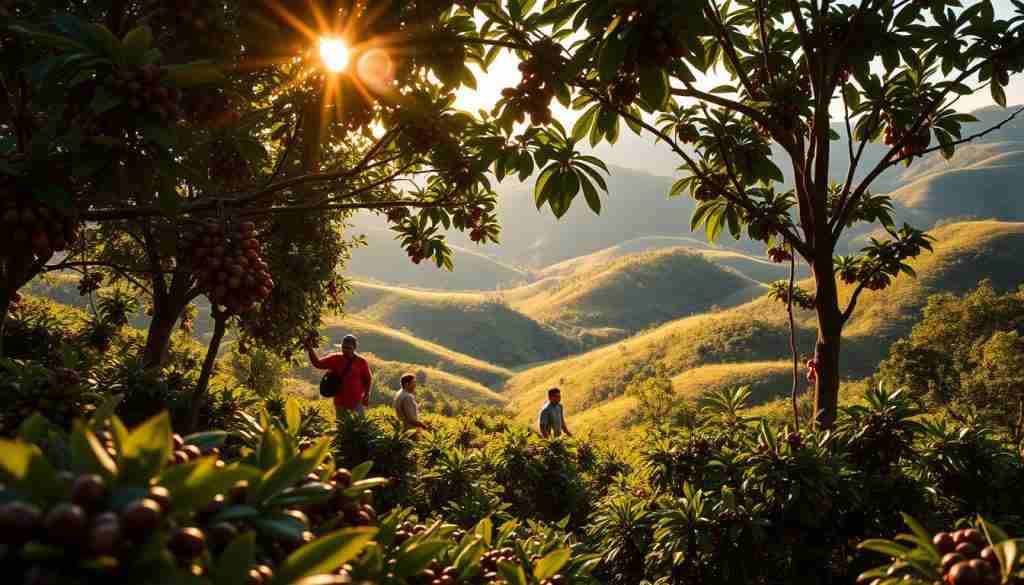
Can your coffee habit help the planet? Forward-thinking companies are proving it can. By merging eco-friendly methods with farmer-focused partnerships, they’re rewriting how the coffee industry operates—one bean at a time.
Commitment to Environmental Responsibility
Solar-powered roasting facilities are no longer rare. Brands like Counter Culture Coffee run 80% of their operations on renewable energy, slashing carbon footprints. Others use biodegradable packaging or fund reforestation projects. “Our goal is to leave farms healthier than we found them,” shares a team member from Intelligentsia, which partners with Guatemalan growers to implement water-saving techniques.
Direct trade relationships ensure farmers earn fair wages. For example, Stumptown Coffee pays 25% above market rates for Ethiopian beans. This approach builds thriving communities while securing top-tier quality. Transparency reports—detailing farm locations and payment terms—are now standard among leading brands.
| Practice | Benefit | Example |
|---|---|---|
| Solar Roasting | Reduces CO2 emissions by 60% | Larry’s Coffee (NC) |
| Carbon Offsets | Neutralizes shipping impacts | Equator Coffees |
| Compostable Bags | Cuts plastic waste | Blue Bottle |
These efforts prove sustainability isn’t a trend—it’s the future. When you choose ethically sourced beans, you’re not just enjoying nuanced flavors. You’re supporting a system that values people and ecosystems as much as your morning cup.
In-Depth Look at Coffee Flavor Profiles
Imagine your coffee as a symphony—each sip layers acidity, sweetness, and body into a harmonious experience. Master blenders balance these elements like conductors, creating cups that dance between bright citrus zips and velvety cocoa finishes. A recent review of coffee flavors revealed how even subtle shifts in processing can transform taste, like Ethiopian beans developing wild strawberry notes when sun-dried on raised beds.
Rich Tasting Notes and Nuanced Reviews
Take Panama’s Finca Hartmann Geisha: its 94-point score stems from jasmine aromas and honeyed peach tones. “Great coffee isn’t just about intensity—it’s clarity,” explains a Q Grader judge. This precision helps cafes identify beans that’ll shine as espresso or cold brew.
Balancing acidity and sweetness matters. Kenyan lots often wow with blackcurrant sharpness softened by brown sugar undertones. Meanwhile, Brazilian green coffee processed naturally offers milk chocolate richness—perfect for those avoiding fruity tang.
Examples from Recent High-Scoring Coffees
| Coffee Origin | Flavor Notes | Score |
|---|---|---|
| Colombia Huila | Caramel, Red Apple | 92 |
| Guatemala Antigua | Dark Cherry, Almond | 89 |
| Rwanda Nyamasheke | Passionfruit, Cocoa Nib | 91 |
These profiles act as flavor roadmaps. A roaster’s 87-point Ethiopian Yirgacheffe might highlight bergamot and blueberry—ideal for pour-over fans. By decoding reviews, you’ll confidently choose beans matching your cravings, whether it’s a dessert-like cup or something crisply refreshing.
How Coffee Experts Rank and Score Roasters
Ranking top coffee creators isn’t guesswork—it’s science blended with global expertise. Industry leaders rely on structured evaluations to spotlight roasters delivering exceptional quality. Let’s break down how these assessments work.
Panel Selection and Methodology
A diverse team of 150+ certified tasters forms the judging backbone. These experts—from Tokyo to São Paulo—evaluate submissions blindfolded to eliminate bias. Each roaster’s beans undergo three brewing methods (espresso, pour-over, French press) for consistency checks.
Judges score based on:
- Flavor clarity (35% weight)
- Bean freshness (tracked by roast date)
- Ethical sourcing documentation
“First-place votes earn 25 points, sliding to 1 point for 25th place,” explains a World Coffee Events coordinator. This system prevents ties and highlights clear favorites.
Understanding the Points System
Total scores determine rankings. A roaster receiving ten 1st-place votes would secure 250 points (10×25). Those with scattered mid-tier votes might score 80-120 points. High consistency across judges often separates the top 10 from the pack.
Recent reviews show how this works:
| Roaster | 1st-Place Votes | Total Points |
|---|---|---|
| Onyx Coffee Lab | 18 | 450 |
| Sey Coffee | 9 | 225 |
Annual updates keep rankings fresh, with new dates announced every March. This transparency lets drinkers trust they’re getting the coffee world’s true standouts—no hype required.
Reviewing the Best Specialty Coffee Brands in the USA
Finding your perfect coffee match starts with knowing which brands deliver quality and creativity. From coast to coast, American coffee roasters are redefining standards through innovative techniques and ethical practices. Let’s explore the leaders shaping today’s brew culture.
Customer Favorites and Notable Mentions
Onyx Coffee Lab stands out for its award-winning blends and scientific precision. Their Southern Weather mix—a balance of Colombian cocoa and Ethiopian florals—won 2023’s “Best Seasonal Release” by Roast Magazine. Sustainability drives their work, with 100% compostable packaging and direct farmer partnerships.
New York’s Sey Coffee earns praise for minimalist roasting that highlights bean purity. Their Ethiopian Guji bursts with apricot and bergamot, a hit among pour-over enthusiasts. “We let the coffee speak for itself,” says their head roaster, emphasizing traceable sourcing from women-owned farms.
JBC Coffee Roasters, a Wisconsin-based company, shines with limited-edition microlots. Their anaerobic-fermented Honduran beans offer pineapple and vanilla notes, scoring 94 points in recent industry reviews. Subscribers rave about their rotating selections, calling it a “flavor passport.”
Portland’s Proud Mary merges Aussie cafe culture with Pacific Northwest innovation. Their “A Coffee” subscription pairs rare beans with brewing guides, ideal for home baristas. Meanwhile, JBC Coffee continues to impress with carbon-neutral shipping and roast-date guarantees.
Why settle for ordinary? These coffee creators prove excellence isn’t just about taste—it’s about building a better cup from seed to sip.
Behind the Scenes: Stories from Coffee Industry Leaders
Behind every exceptional cup lies a story of grit and creativity. Meet the people who transformed humble beans into beloved brands through late-night roasts and bold experiments. Their journeys reveal how passion fuels progress in the coffee world.
Inspiring Success Stories and Brand Journeys
Take JBC Coffee Roasters, a family-run company started in a Wisconsin garage. Founder Jon Ferguson recalls roasting batches in a modified popcorn machine: “We burned more beans than we sold those first two years.” Today, their seasonal releases earn 90+ scores in industry reviews.
Teams often face unexpected hurdles. A Portland-based roaster once lost 300 pounds of beans to a warehouse flood. “Our team worked 72 hours straight to save the harvest,” shares the CEO. This dedication built trust with farmers and customers alike.
| Company | Founding Year | Key People | Milestone |
|---|---|---|---|
| JBC Coffee | 2005 | Jon Ferguson | First Solar-Powered Roastery (2018) |
| Brooklyn Brew Beans | 2012 | Maria Chen | National Retail Expansion (2022) |
| Austin Craft Co. | 2016 | Diego Ruiz | Direct Trade Certification (2020) |
These stories remind us that great coffee isn’t just about taste—it’s about people pushing boundaries. Whether perfecting roast curves or building eco-friendly facilities, their collective drive shapes your daily brew.
Coffee Subscriptions and the Convenience of Direct Sourcing
What if your morning brew could surprise you every month? Subscription services like Roastful Coffee deliver curated bags straight to your door, blending convenience with exploration. These plans eliminate guesswork while introducing drinkers to rare beans and innovative blends.
Subscription Perks and Exclusive Offerings
Modern coffee subscriptions go beyond convenience. Many offer limited-edition releases, like a Rwandan microlot aged in bourbon barrels or a Peruvian blend with hints of lavender. Roastful’s model partners with 12 different roasteries quarterly, letting subscribers taste award-winning creations from Brooklyn to Portland.
Freshness is guaranteed. Most services ship beans within 48 hours of roasting, locking in vibrant flavors. “We treat each shipment like a café experience—complete with brewing tips,” notes a Roastful team member. This approach turns kitchens into personal coffee labs.
Direct sourcing strengthens connections between drinkers and growers. Some subscriptions include farmer interviews or virtual tours of partner roasteries. Others allocate profits to fund community projects in coffee-growing regions. It’s more than a delivery—it’s a bridge to the people behind your cup.
Innovations in the Coffee Market: Trends and Predictions
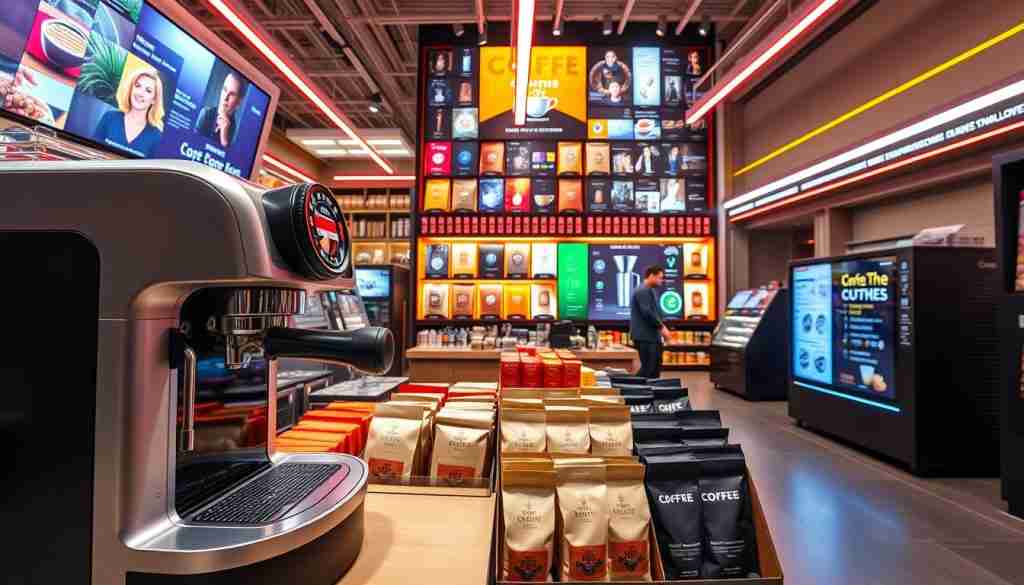
How is technology rewriting the rules of your daily brew? The coffee industry is undergoing a seismic shift, driven by smart machines and eco-conscious drinkers. From bean tracking apps to AI-powered roasters, every step of production is getting a high-tech makeover.
Emerging Technologies in Roasting
Roasting rooms now look more like science labs. Companies like Cropster use IoT sensors to monitor bean temperature and airflow in real time. “Our system adjusts heat 40 times per roast,” explains a San Francisco-based tech developer. This precision eliminates guesswork, ensuring each batch matches flavor profiles down to the last caramel note.
AI is changing how producers predict outcomes. Algorithms analyze weather patterns and soil data to recommend optimal roast curves. A Guatemalan farm using this tech saw a 15% quality boost in their annual harvest. Even small roasteries benefit—handheld colorimeters now cost less than $200, making consistency accessible to all.
Market Shifts and Future Outlook
Consumers want transparency and value. A 2024 survey found 68% of buyers check roast dates before purchasing, while 52% prioritize fair-trade certifications. This shift pushes coffee companies to share detailed sourcing stories, often via QR codes on packaging.
Price remains a hurdle. While 43% of drinkers say they’d pay more for eco-friendly beans, budgets tighten during economic dips. Experts predict hybrid solutions—like blockchain-tracked blends at mid-tier costs—will dominate by 2026. Large chains already test these models, offering traceable single-origins alongside classic blends.
| Trend | Impact | Adoption Rate |
|---|---|---|
| AI Roasting | +22% Flavor Consistency | 34% of Top Brands |
| Eco-Packaging | -18% Plastic Use | 61% US Roasteries |
| Direct Trade Apps | +40% Farmer Income | 29% Market Penetration |
The future? Think hyper-personalized subscriptions using your brewing habits to curate monthly picks. As one Seattle innovator notes: “We’re not just selling coffee—we’re designing experiences sip by sip.”
Celebrating Specialty Coffee: Awards, Accolades, and Milestones
Awards in coffee aren’t just trophies—they’re stamps of excellence that transform morning routines into moments of discovery. Recognition from industry competitions validates a roaster’s skill and elevates consumer trust. Let’s explore how accolades shape the coffee market and spotlight innovators.
Recognitions and Industry Achievements
JBC Coffee Roasters earned “Roaster of the Year” in 2023 for their Honduran microlot, scoring 96 points in a review by Roast Magazine. “This award reflects 18 years of refining our craft,” shared founder Jon Ferguson. Their win highlights how consistency and ethical sourcing build reputations.
New York’s Sey Coffee made waves with back-to-back wins at the Good Food Awards. Their Ethiopian Guji blend impressed judges with its clarity of apricot and bergamot notes. Such victories often boost a company’s visibility, driving demand from cafes and home brewers alike.
Competitions like the U.S. Roaster Championship push boundaries. Bonlife Coffee clinched the 2024 title using a Peruvian bean aged in maple syrup barrels. This creative approach—paired with flawless technique—showcases how awards celebrate both quality and bold experimentation.
- Roast Ratings’ annual list names top performers based on blind tastings
- Direct trade certifications now influence scoring in major events
- High marks in reviews correlate with 30% sales spikes for winners
These milestones do more than fill trophy cases—they guide drinkers toward exceptional coffee. When a bag bears a competition logo, it’s a promise of craftsmanship you can taste.
Tips for Selecting Your Next Coffee Experience
Choosing your next coffee adventure can feel overwhelming with so many options. Focus on three key factors: roast style, origin transparency, and freshness. Brands like Onyx Coffee Lab emphasize traceable sourcing, listing farm names and processing methods on every bag.
What to Look For in a Roaster
Check roast dates first—beans peak 7-10 days after roasting. Look for detailed flavor notes rather than vague terms like “bold” or “smooth.” Ethical sourcing matters: Bonlife Coffee Roasters shares farmer interviews online, connecting drinkers to growers.
| Roast Level | Flavor Notes | Best Use |
|---|---|---|
| Light | Lemon, Floral | Pour-over |
| Medium | Caramel, Nutty | Drip Brew |
| Dark | Chocolate, Smoky | Espresso |
A Beginner’s Tasting Guide
Start by smelling the grounds—citrus or cocoa? Sip slowly, noting body (light like tea or creamy?). Finally, assess the finish: does it linger pleasantly? Visit coffee shops to compare multiple cups side-by-side. Many cafés offer flights, like a place in Austin serving Ethiopian and Colombian samples together.
Combine in-store visits with online reviews. Roasters like JBC Coffee post brewing videos to help home baristas replicate café-quality flavor. Remember, your perfect cup balances personal taste and expert craftsmanship.
Conclusion
Your coffee choice impacts more than just your taste buds—it supports communities and ecosystems worldwide. Today’s coffee landscape thrives on diversity, from solar-powered roasting facilities to AI-driven flavor profiling. Companies like JBC Coffee lead the charge, proving quality and ethics can coexist in every bag.
Behind each exceptional blend lies a dedicated team of farmers, roasters, and innovators. Their collaborations create cups bursting with unique character—whether it’s a floral Ethiopian pour-over or a chocolatey Colombian espresso. The industry’s focus on traceable sourcing ensures you know exactly where your beans begin their journey.
Looking ahead, the coffee market continues to evolve with exciting opportunities. Limited-edition releases and compostable packaging redefine what’s possible in your morning ritual. Freshness remains key—always check roast dates to experience flavors at their peak.
Ready to elevate your brew? Explore our updated recommendations and brewing guides on this page. Every purchase becomes part of a larger story—one that celebrates craftsmanship, sustainability, and the pure joy of discovery.