
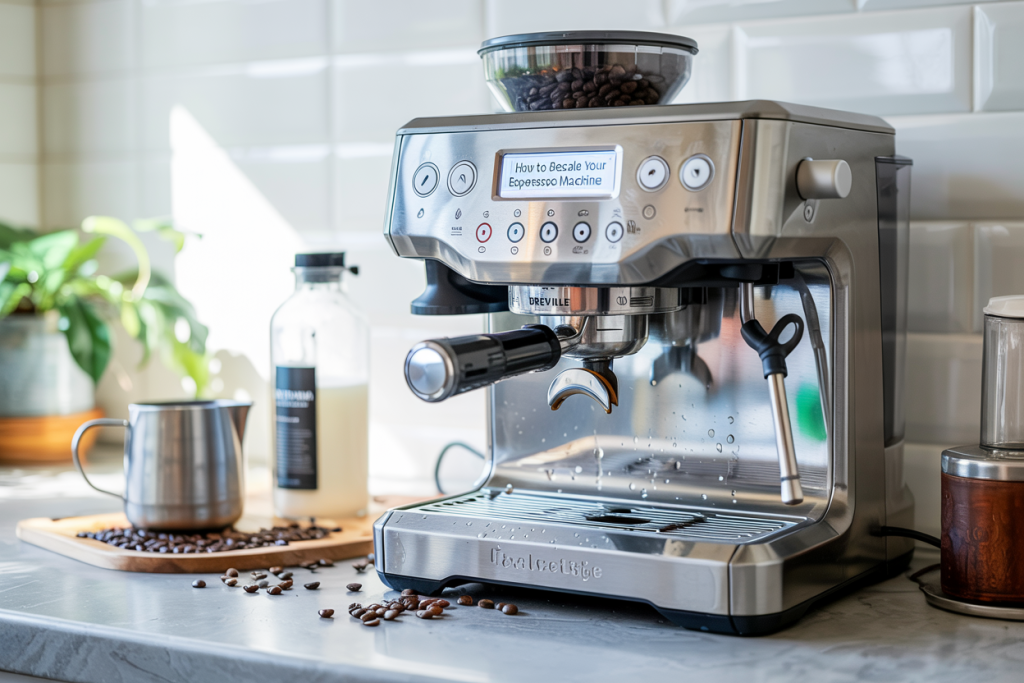
Properly maintaining your Breville espresso machine is essential for brewing perfect coffee, and descaling is perhaps the most crucial maintenance task. Over time, minerals from water create stubborn deposits inside your machine that can affect performance and flavor. This comprehensive guide will walk you through everything you need to know about how to descale your Breville coffee machine effectively, ensuring your morning espresso remains as delicious as the day you first used your machine.
Why is descaling your Breville espresso machine important?
Descaling your Breville espresso machine isn’t just recommended maintenance—it’s absolutely essential for the longevity and performance of your coffee maker. When water passes through your espresso machine, especially if you live in an area with hard water, mineral deposits gradually accumulate inside the internal components. These minerals—primarily calcium and magnesium—create a chalky buildup that can restrict water flow, affect heating elements, and ultimately compromise your machine’s ability to brew properly. Regular descaling dissolves and removes these mineral deposits, ensuring your Breville coffee machine operates at peak efficiency and continues to extract the perfect espresso for years to come.
How mineral buildup affects espresso quality
The mineral buildup inside your Breville espresso machine can dramatically impact the quality of your coffee in several ways. First, these deposits can alter the ideal brewing temperature that your Breville is designed to maintain. When scale forms on heating elements, they become less efficient, potentially resulting in under-extracted espresso that lacks depth and flavor. Additionally, mineral deposits can restrict water flow through narrow passages in the machine, affecting pressure and leading to inconsistent extraction. You might notice your once-perfect crema diminishing or detect unusual flavors in your coffee. Scale buildup can also impact the precision of your machine’s pressure gauge on models like the Breville Barista Express, leading to inaccurate readings that make it difficult to dial in your espresso shots. Even the most expensive coffee beans and the skills of an experienced barista cannot compensate for the negative effects of scale buildup in your espresso machine.
Signs your Breville needs descaling
Knowing when your Breville espresso machine is ready for descaling is crucial for maintaining optimal performance. The most obvious indicator is when the descale light illuminates on your machine’s display panel, signaling that your Breville coffee machine has detected sufficient mineral buildup to warrant cleaning. However, there are several other signs to watch for even before this indicator appears. You might notice your espresso flowing more slowly than usual, or perhaps your machine takes longer to heat up. The taste of your coffee might subtly change, developing bitter notes or lacking the complexity you’re accustomed to enjoying. On Breville machines with pressure gauges, inconsistent pressure readings during extraction can indicate scale interference. Some users report hearing unusual noises as water forces its way through narrowed pathways clogged with mineral deposits. If your machine struggles to produce sufficient steam for milk frothing, this could also indicate that descaling is overdue. Being attentive to these warning signs allows you to descale your Breville before performance significantly deteriorates.
Recommended descaling frequency for Breville machines
The appropriate frequency for descaling your Breville espresso machine depends on several factors, primarily your water hardness and usage patterns. Most Breville machines are equipped with intelligent systems that monitor usage and will illuminate a descale light when the machine is ready for descaling. However, as a general guideline, most Breville coffee machines benefit from descaling every 2-3 months with regular use. If you live in an area with particularly hard water, you might need to descale more frequently—perhaps every 4-6 weeks. Conversely, if you use filtered water or live in a soft water area, you might extend descaling intervals to every 4-6 months. Breville dual boiler models may require more frequent descaling due to their complex water systems. It’s worth noting that using the appropriate water filter for your Breville can significantly reduce mineral buildup and extend the time between descaling sessions. Remember that consistent maintenance between these deeper cleaning sessions is also essential for keeping your espresso machine in optimal condition.
What descaling solutions work best for Breville coffee machines?
Selecting the right descaling solution for your Breville coffee machine is crucial for effective maintenance without damaging sensitive internal components. The market offers numerous options, but not all descalers are created equal when it comes to espresso equipment. The ideal descaler needs to effectively dissolve mineral deposits and limescale buildup while being gentle enough not to corrode the machine’s heating elements, gaskets, and water lines. When considering descaling solutions, you’ll need to weigh factors such as effectiveness, safety for your specific Breville model, environmental impact, and whether the product is approved by the manufacturer. Using the wrong descaler could potentially void your warranty or cause damage to your expensive espresso machine, so it’s worth taking the time to select an appropriate product that will safely restore your machine to peak performance.
Breville’s official cleaner and descaler options
Breville offers specially formulated cleaner and descaler products designed specifically for their espresso machines, making them the safest and most reliable choice for maintaining your investment. The Breville Eco Cleaner is a particularly popular option that comes in liquid form and has been engineered to dissolve mineral deposits effectively without damaging internal components. For machines with built-in descale modes like the Barista Express, these official solutions are calibrated to work perfectly with the programmed descaling cycles. Breville also produces cleaning tablets primarily designed for backflushing the group head, though these address coffee oil buildup rather than mineral scale. Using Breville’s official descaling products ensures compatibility with all their espresso machine models including the Bambino, Barista Express, and dual boiler systems. While these proprietary descalers typically cost more than generic alternatives, many Breville owners consider this a worthwhile investment to protect their espresso machine and maintain warranty coverage. The precise formulation of these products targets limescale while preserving gaskets, heating elements, and other sensitive components specific to Breville’s engineering specifications.
Eco-friendly descaling alternatives
For environmentally conscious coffee enthusiasts, several eco-friendly alternatives exist that effectively descale your Breville espresso machine while minimizing environmental impact. Citric acid has emerged as one of the most popular eco-friendly descaling options. This natural compound, derived from citrus fruits, effectively dissolves mineral deposits and limescale buildup without harsh chemicals. To create a citric acid descaling solution, simply dissolve 2 tablespoons of food-grade citric acid powder in a liter of water. Another option gaining popularity among Breville owners is lactic acid-based descalers, which are biodegradable and generally considered safe for espresso machine components. Some specialty coffee shops and online retailers now offer “green” descaling products specifically formulated for coffee equipment that use plant-based acids and environmentally responsible ingredients. These eco-friendly descalers may take slightly longer to dissolve stubborn mineral deposits compared to stronger chemical solutions, but they provide effective cleaning while aligning with sustainable practices. When using any alternative descaler, be sure to follow the proper descaling process for your specific Breville model and rinse thoroughly afterward to prevent any residual flavors affecting your espresso.
Can you use vinegar to descale a Breville?
The question of whether to descale your machine with vinegar is common among Breville owners looking for cost-effective solutions. While white vinegar does contain acetic acid that can dissolve mineral deposits, Breville specifically advises against using vinegar in their espresso machines. There are several compelling reasons for this recommendation. First, vinegar’s acidity level is not optimized for espresso machine components and may potentially damage gaskets, seals, and internal parts over time. Additionally, vinegar leaves behind a potent odor and flavor that can be extremely difficult to rinse away completely, potentially tainting your espresso for dozens of shots after descaling. The acetic acid in vinegar is also less effective at removing certain types of mineral buildup compared to properly formulated descalers or even citric acid. If budget is a concern, food-grade citric acid provides a more appropriate alternative than descaling your Breville coffee machine with vinegar. While some users report successfully using diluted vinegar solutions (typically one part vinegar to three parts water), doing so may void your warranty and risks long-term damage to your expensive espresso machine. The potential savings from using vinegar rarely justify the risks to both machine longevity and espresso quality.
Step-by-step guide to descale your Breville espresso machine
Descaling your Breville espresso machine may seem intimidating at first, but with the right approach, it becomes a straightforward maintenance routine that preserves your investment. The descaling process removes accumulated mineral deposits that can impair function and flavor, essentially giving your machine a fresh start. While specific steps may vary slightly between different Breville models, the fundamental principles remain consistent. Proper descaling involves preparation, running the actual descaling cycle, and thorough rinsing afterward. Taking your time with each phase ensures effective removal of scale without damaging sensitive components. The following comprehensive guide breaks down each stage of the descaling process to help you maintain your Breville coffee machine in optimal condition, regardless of which specific model you own.
Preparing your machine for the descaling process
Before you begin the descaling process for your Breville espresso machine, proper preparation is essential. Start by ensuring your machine is turned off and has cooled completely—attempting to descale a hot machine can be dangerous and less effective. Next, remove and empty the drip tray, water tank, and portafilter. If your Breville has a water filter installed in the reservoir, remove it temporarily as it shouldn’t be exposed to descaling solution. Prepare your descaling solution according to the manufacturer’s instructions; if using Breville’s official descaler, measure precisely to achieve the recommended concentration. For most Breville coffee machines, you’ll need to fill the water tank to the designated “DESCALE” line with water first, then add the descaling solution. Some models like the Breville Barista Express require you to activate descale mode before adding the solution, so consult your specific model’s manual. Position a large container under the group head and steam wand to catch the descaling solution as it flows through the machine. Finally, ensure you have set aside enough uninterrupted time (typically 30-45 minutes) to complete the entire descaling process without rushing, as your machine will need your attention at various stages.
Running the descaling cycle properly
When your Breville espresso machine is ready for descaling and properly prepared, it’s time to run the descaling cycle. Most modern Breville machines feature a dedicated descale mode that automates much of the process. To activate this mode on many models, turn off your machine, then simultaneously press and hold the 1-cup and 2-cup buttons while turning the power back on. The exact button combination varies by model, so consult your manual for specific instructions. Once descale mode is activated, your machine’s display or indicator lights will guide you through the process. The descaling cycle typically begins by pumping the solution through the group head, allowing the descaler to dissolve mineral buildup in the brewing pathway. After a specified time, you’ll usually be prompted to turn the steam dial or activate the hot water function to clean the steam wand system. Throughout this descaling process, the mineral deposits inside your Breville coffee machine will dissolve and flush out through the group head and steam wand into your waiting container. Some dual boiler Breville models have more complex descaling procedures that address each boiler separately. Be patient and follow each step carefully—rushing through the descaling cycle can leave deposits behind, defeating the purpose of the maintenance.
Post-descaling rinse procedure
After completing the descaling cycle, a thorough rinse procedure is crucial to remove all traces of descaler from your Breville espresso machine. Begin by emptying and rinsing the water tank thoroughly, then refill it with clean, fresh water. For most Breville coffee machines, you’ll need to run a similar cycle with fresh water as you did with the descaling solution—this is often called the rinse cycle. Your machine may automatically prompt you to perform this rinse after the descaling process is complete. Run water through the group head and steam wand several times to flush out any residual descaling solution. For thorough cleaning, it’s recommended to perform at least two complete rinse cycles, refilling the tank with fresh water between each. After rinsing, reinsert your clean water filter (or install a new one if it’s due for replacement). Some baristas recommend pulling several “blank shots” (running water through the machine with the portafilter in place but no coffee) after descaling to ensure no residual descaler remains in the system. Finally, wipe down the exterior of your machine and reassemble all components. Your Breville espresso machine should now be free of mineral deposits and ready to brew delicious coffee once again, with the descale light reset until the next maintenance cycle is needed.
How to descale specific Breville espresso machine models
While the general principles of descaling remain consistent across the Breville lineup, each model has unique features and requirements that affect the descaling process. Understanding these model-specific considerations ensures you properly maintain your particular Breville espresso machine without risking damage to specialized components. From entry-level machines to professional-grade equipment, Breville has designed each model with different internal configurations, boiler systems, and control interfaces. These variations necessitate slightly different approaches to descaling, though all aim to accomplish the same goal: removing mineral buildup that impairs function and flavor. The following sections address the specific descaling procedures for Breville’s most popular espresso machine models, highlighting important differences in the process that owners should be aware of when maintaining their particular equipment.
Descaling the Breville Barista Express
The Breville Barista Express is one of the brand’s most popular espresso machines, combining grinding and brewing capabilities in one unit. Descaling this model requires specific steps to address its unique design. To begin descaling your Breville Barista Express, you’ll need to access the hidden descale mode by turning the machine off, then simultaneously pressing and holding the 1-cup button and the Steam button while turning the power back on. Once the machine enters descale mode (indicated by flashing lights), you’ll need to remove the portafilter and position a large container under both the group head and steam wand. Fill the water tank with the properly diluted descaling solution up to the DESCALE line marked inside the tank. The descaling process for the Barista Express happens in stages—first cleaning the brewing circuit when you press the 2-cup button, then addressing the steam system when you activate the steam dial. During the process, the Power button and Steam lights will flash, guiding you through each step. After completing the descaling cycle, you must perform a thorough rinse by refilling the tank with fresh water and repeating similar steps to flush all descaler from the system. The Barista Express has a particularly sensitive pressure gauge and precision brewing components that benefit greatly from regular descaling to maintain consistent espresso quality.
Descaling Breville dual boiler machines
Breville’s dual boiler machines represent the premium end of their espresso lineup, featuring separate boilers for brewing and steaming that require special attention during descaling. These sophisticated espresso machines, including the Breville Dual Boiler (BDB) model, need a more comprehensive descaling process to address mineral buildup in both boiler systems. When your dual boiler Breville is ready for descaling, you’ll need to follow a two-part process to properly clean both boilers. Begin by accessing the machine’s descale mode through the menu system on the digital display rather than using button combinations like on simpler models. The process typically starts with descaling the steam boiler, followed by the brewing boiler, with the machine’s interface guiding you through each step. Due to the larger water capacity of dual boiler systems, you’ll likely need a greater quantity of descaling solution than for single-boiler machines. The descaling cycle for these machines is also longer, sometimes taking up to an hour to complete properly. It’s particularly important to follow the manufacturer’s instructions precisely when descaling these complex machines, as the specialized components and multiple water pathways require proper care to maintain the precision engineering that makes these espresso machines exceptional. After descaling, dual boiler machines require especially thorough rinsing to ensure no descaler remains in either boiler system.
Descaling Breville Bambino and Bambino Plus
The Breville Bambino and Bambino Plus represent the company’s compact, entry-level espresso machines, but they still require regular descaling to maintain performance. These smaller models feature simplified descaling procedures compared to their more complex counterparts, making maintenance more accessible for new espresso enthusiasts. When your Bambino indicates it’s ready for descaling (usually through flashing lights), begin by ensuring the machine is off. To enter descale mode on the Bambino or When your Bambino indicates it’s ready for descaling (usually through flashing lights), begin by ensuring the machine is off. To enter descale mode on the Bambino or Bambino Plus, follow these steps:
1. First, empty the drip tray and water tank completely.
2. Mix the descaling solution according to the manufacturer’s instructions, typically one sachet of Breville descaling powder dissolved in 1 liter of water.
3. Fill the water tank with the descaling solution up to the DESCALE line marked on the tank.
4. Press and hold both the 1-cup and 2-cup buttons simultaneously, then while holding these, press and hold the power button as well.
5. Continue holding all three buttons for approximately 5 seconds until the machine beeps and the 1-cup and 2-cup buttons begin flashing alternately.
6. Place a large container (at least 1 liter capacity) under the group head and steam wand.
7. Press the 1-cup button to start the descaling process. The machine will pump descaling solution through the group head and steam wand intermittently.
8. Once the first phase is complete (approximately 5 minutes), the 1-cup button will illuminate steadily.
9. Empty and rinse the water tank thoroughly, then refill with clean water up to the MAX line.
10. Press the 1-cup button again to begin the rinse cycle, which flushes any remaining descaling solution from the machine.
11. After the rinse cycle completes, the machine will exit descale mode automatically and return to standby mode.
12. Empty the container and drip tray, then rinse all components thoroughly.
For best results, perform this descaling procedure every 2-3 months, depending on your water hardness and frequency of use. Regular descaling will extend the life of your machine and ensure optimal espresso quality.
FAQ
Q: How often should I descale my Breville coffee maker?
A: You should descale your Breville coffee maker every 2-3 months, depending on your water quality and usage frequency. Hard water areas may require more frequent descaling to prevent mineral build-up. Regular descaling keeps your coffee maker running smoothly and extends your machine life. Some Breville models have indicator lights that will tell you when it’s time to descale, making maintenance even more convenient.
Q: What’s the best Breville compatible descaling solution to use?
A: For the best results, use Breville’s own descaling solution which is specifically formulated for their machines. Alternatively, you can use other commercially available solutions like Urnex Dezcal or a citric acid based descaler. Avoid using vinegar as it can damage internal components and affect the taste of your coffee. Each bottle of descaling solution typically comes with instructions for proper dilution ratios. Always ensure whatever product you choose is compatible with espresso machines.
Q: Do I need to descale my compact Breville espresso machine differently?
A: Compact Breville espresso machines follow similar descaling procedures to their larger counterparts, but you may need to adjust the amount of descaling solution due to the smaller water reservoir. The general process remains the same: empty the water tank, add the descaling solution according to package instructions, run descaling cycles, and thoroughly rinse afterward. Always refer to your specific model’s manual as some compact models might have slightly different procedures to account for their size.
Q: How do I clean a coffee residue from my Breville machine?
A: To clean coffee residue from your Breville machine, use a dedicated cleaning tablet like Cafiza. Empty the portafilter, insert the cleaning tab into the single shot basket, and run a cleaning cycle according to your machine’s instructions. For drip coffee residue in other parts of the machine, wipe surfaces with a damp cloth. Clean the steam wand after each use by purging and wiping it down. Regular cleaning prevents oil buildup that can make your cup of coffee taste bitter.
Q: What are the signs that I need to descale my Breville espresso machine?
A: Clear signs that you need to descale your Breville include slower extraction times, unusual noises during brewing, coffee that’s not hot enough, decreased pressure, inconsistent flow, and a noticeable change in the taste of your coffee. Some models will display a “DESCALE” alert. Don’t ignore these signs, as mineral deposits can eventually damage your machine and significantly reduce its lifespan if left untreated.
Q: Can I use vinegar to descale my Breville coffee maker?
A: While vinegar works for some coffee makers, it’s not recommended for descaling your Breville coffee maker. Vinegar can damage the internal components and leave behind an odor that affects coffee taste. Instead, use Breville’s official descaling solution or other commercially available descalers specifically designed for espresso machines. These solutions are formulated to safely remove mineral build-up without harming your machine or leaving residue that could affect your coffee’s flavor.
Q: How do I clean your espresso machine after descaling?
A: After descaling, it’s crucial to thoroughly clean your espresso machine to remove any remaining solution. First, refill the water tank with fresh water and run 2-3 brewing cycles without coffee grounds to flush the system. Clean the portafilter, basket, and steam wand thoroughly. Wipe down external surfaces with a damp cloth. This cleaning process ensures no descaling solution remains in the system, which could affect the taste of your coffee and potentially harm the machine’s components.
Q: How can I keep my Breville coffee maker in optimal condition between descaling sessions?
A: To keep your Breville coffee in optimal condition between descaling sessions, rinse removable parts daily and wipe down the exterior. Clean the portafilter and group head regularly using a brush to remove coffee grounds. Empty and rinse the drip tray frequently. Purge the steam wand after each use. Use filtered water to reduce mineral build-up. Run empty brewing cycles occasionally to flush the system. These simple maintenance habits will extend your machine life and ensure consistent coffee quality.