
Welcome to the world of specialty coffee, where every sip tells a story. If you’ve ever wondered why some brews taste smoother, richer, or more complex, you’re likely tasting the magic of Coffea arabica. This species accounts for over 60% of global coffee production, prized for its refined flavors and aromatic depth.
For centuries, these beans have shaped coffee culture worldwide. Their journey begins in high-altitude farms, where cooler climates nurture delicate flavors. Unlike harsher varieties, arabica offers a balanced acidity and notes ranging from fruity to chocolatey – a hallmark of specialty-grade quality.
What makes this coffee so beloved? It’s not just the taste. From Ethiopian highlands to Colombian mountains, growers dedicate generations to perfecting cultivation methods. Today, it’s the cornerstone of artisan roasts and third-wave cafes, appealing to drinkers who crave nuance in every cup.
In this guide, we’ll explore how to brew these beans for maximum flavor, compare their traits with other varieties, and uncover sustainable practices shaping their future. Whether you’re a home barista or curious sipper, prepare to deepen your appreciation for coffee’s crown jewel.
Key Takeaways
- Coffea arabica drives 60% of global coffee production due to its superior flavor profile
- Grown primarily at high elevations for optimal taste development
- Features lower acidity and more complex notes compared to other varieties
- Forms the foundation of specialty coffee culture worldwide
- Later sections will compare brewing methods and sustainability practices
Introduction to the World of Coffee Beans
From ancient Ethiopian forests to modern morning rituals, coffee plants have shaped civilizations. The genus Coffea includes over 120 species, but two dominate global consumption: Coffea arabica and Coffea canephora (commonly called Robusta). These plants thrive under specific growing conditions, with altitude, rainfall, and soil chemistry defining their flavor potential.
The Journey from Seed to Cup
A coffee plant’s life begins as a seedling, taking 3-4 years to produce fruit. Farmers nurture these plants in tropical climates, where steady temperatures between 60°F–70°F protect delicate blossoms. When cherries ripen to deep red, skilled pickers harvest them by hand—a critical step for quality control.
Processing methods vary globally. Washed coffees ferment in water to remove fruity pulp, while natural-dried beans absorb sweet notes from cherry remnants. After milling and grading, green seeds travel worldwide for roasting. Heat transforms their chemical makeup, unlocking flavors from caramel sweetness to floral hints.
An Overview of Global Coffee Production
Nearly 70 countries grow coffee commercially, with Brazil, Vietnam, and Colombia leading output. Coffea canephora dominates regions with hotter climates, resisting pests that harm delicate arabica crops. Farmers often blend species to balance cost and taste.
Wild coffee species still grow in African forests, offering genetic diversity for future cultivation. Commercial farms focus on high-yield hybrids, but specialty markets prioritize pure coffee plants for distinct regional profiles. Understanding these differences helps drinkers appreciate their brew’s origin story.
Exploring Arabica Beans: Rich Flavor and Cultivation
High in Ethiopia’s misty mountains grows a coffee legend. This plant thrives where cool nights slow ripening, creating flavors as layered as the terrain itself. Let’s uncover why its delicate nature rewards growers with unmatched complexity.

The Science Behind Superior Taste
Elevation shapes everything. At 2,000-6,000 feet, cooler conditions force plants to develop complex sugars for survival. This natural process gifts your cup with floral hints and wine-like acidity. Lower-altitude coffees often taste flat by comparison.
Farmers face challenges here. Steep slopes prevent machine harvesting, requiring hand-picking at peak ripeness. “You taste the labor in every sip,” says a Colombian grower. “Each cherry gets individual attention.”
Roots of a Global Icon
First cultivated in 7th-century Yemen, this variety spread through trade routes. Monks brewed it to stay alert during prayers, unknowingly launching a botanical revolution. Today, Brazil and Colombia lead production, though Ethiopian wild strains remain vital for genetic diversity.
| Altitude Range | Flavor Notes | Growing Challenges |
|---|---|---|
| 2,000-3,500 ft | Milk chocolate, nutty | Frost risk |
| 3,500-5,000 ft | Citrus, jasmine | Soil erosion |
| 5,000+ ft | Berry, wine-like | Longer maturation |
Modern farms use shade trees to mimic native conditions. This approach protects plants while letting flavors develop slowly. Though yields are lower than commercial varieties, the reward comes in every aromatic sip.
Comparing Arabica vs. Robusta Coffee
Ever wondered why some coffees taste smooth while others punch with bitterness? The answer lies in two coffee giants: arabica and robusta. Let’s break down their unique traits to help you pick your perfect brew.
Flavor Profile and Aromatic Differences
Coffea arabica dances on the palate with fruity highs and chocolatey undertones. Its delicate acidity pairs well with floral aromas – think jasmine or honey. “Arabica is like a symphony,” says Seattle barista Mia Torres. “Each sip reveals new layers.”
Robusta coffee marches to a different beat. Earthy tones dominate, with bold peanut or rubber notes. Higher acidity gives it a sharper edge, perfect for cutting through milk in Italian-style drinks. This flavor profile explains why 80% of espresso blends use robusta beans.
| Trait | Arabica | Robusta |
|---|---|---|
| Common Notes | Berry, caramel | Dark chocolate, wood |
| Acidity | Bright & wine-like | Harsh & lingering |
| Best For | Pour-over, drip | Espresso, iced coffee |
Caffeine Content and Bean Appearance
Need a morning jolt? Robusta beans pack nearly double the caffeine – 2.7% vs arabica’s 1.5%. This natural pest deterrent makes them easier to grow but creates a bitter aftertaste. Energy drink manufacturers often use robusta for its potent kick.
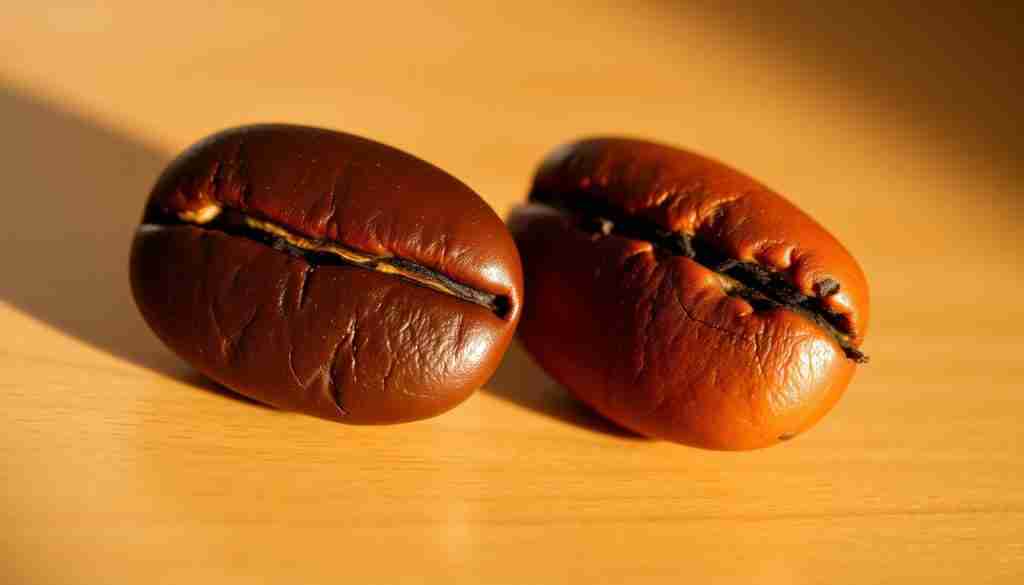
Spot the differences arabica robusta display visually. Arabica seeds curve like elongated ovals with a central crease. Robusta beans appear smaller and rounder, resembling pale peanuts. Next time you buy whole beans, check their shape – it’s your first clue to flavor intensity.
While arabica wins popularity contests, robusta coffee holds its ground in affordability and strength. Your preference depends on whether you value subtlety or power in your cup. Pro tip: Blend both for balanced cold brews!
Growing Conditions, Production Methods, and Sustainability
What does it take to grow coffee that tastes extraordinary? The answer lies in balancing nature’s gifts with human ingenuity. Farmers worldwide face mounting pressures to protect ecosystems while meeting coffee production demands.
Elevation’s Flavor Magic
At high altitudes, cooler temperatures slow cherry maturation. This extended growth period allows complex sugars to develop, creating the bright acidity and floral notes coffee lovers crave. However, steep terrain makes mechanical harvesting impossible – every cherry gets hand-picked.
| Factor | Arabica | Robusta Plants |
|---|---|---|
| Ideal Altitude | 2,000-6,000 ft | 0-2,000 ft |
| Temp Tolerance | 60-70°F | 75-85°F |
| Rainfall Needs | 40-60″ annually | 60-100″ annually |
When Weather Fights Back
Climate change reshapes growing regions. Ethiopia’s coffee forests shrank 30% since 2000 due to rising temperatures and deforestation. By 2050, 50% of current arabica lands may become unsuitable, warns the World Coffee Research network.
Hardier robusta plants gain attention as insurance crops. Vietnamese farmers now mix them into specialty blends for heat resistance. Meanwhile, Colombian growers plant shade trees to mimic natural ecosystems – a practice boosting yields by 20% in trials.
The future of coffee production hinges on innovation. From drought-resistant hybrids to carbon-neutral processing, the world‘s farmers rewrite the rules to keep your cup full.
Brewing Techniques and Taste Profiles
Your morning cup holds hidden flavors waiting to surface. Mastering brewing methods transforms simple grounds into layered experiences. Let’s explore how to coax out caramel whispers, fruity bursts, and floral finishes.
Optimizing Extraction for Complex Flavors
Grind size acts like a flavor dial. Too fine? Bitter overload. Too coarse? Weak tea vibes. Aim for consistency – imagine sea salt for pour-over or breadcrumbs for espresso. Water temperature matters too: 195°F–205°F unlocks sweetness without scorching delicate notes.
Time your brew like a pro:
- French press: 4-minute steep for chocolatey depth
- Espresso: 25–30 seconds for caramel intensity
- Cold brew: 12–18 hours for smooth, low-acid sips
How Different Brewing Methods Enhance Bean Characteristics
Pour-over highlights bright citrus notes through paper filters. “It’s like turning up the volume on acidity,” explains Portland roaster Jenna Wu. French press oils add body, perfect for nutty profiles. Espresso machines pressurize extraction, magnifying caramelized sugars from darker roasts.
| Method | Ideal Grind | Flavor Boost |
|---|---|---|
| Pour-over | Medium-fine | Floral & tea-like |
| AeroPress | Fine | Berry brightness |
| Moka Pot | Extra fine | Dark chocolate punch |
For instant coffee lovers: Choose light roasts. Freeze-dried processing preserves more origin character than traditional spray-dried methods. Mix with hot (not boiling) water to avoid flattening delicate notes.
Conclusion
Your journey through coffee’s rich landscape ends with one clear takeaway: quality matters. The smooth, nuanced flavors nurtured at high elevations set these crops apart, offering tasting notes from citrus zest to caramel swirls. While robusta brings bold intensity for espresso lovers, nothing matches the layered complexity of well-crafted 100% arabica.
Farmers’ dedication shines through in every step – from shade-grown practices protecting ecosystems to hand-picked harvests ensuring peak ripeness. Sustainable methods aren’t just trends; they’re essential for preserving coffee’s future as climates shift.
Ready to elevate your brew? Start by choosing 100% arabica labels from ethical growers. Experiment with pour-over techniques or French presses to highlight its floral brightness. Each informed choice – whether in sourcing or brewing – deepens your connection to this timeless craft.
As specialty coffee evolves, one truth remains: great flavors begin with care. Here’s to savoring every sip of what’s next.